¶ Overview
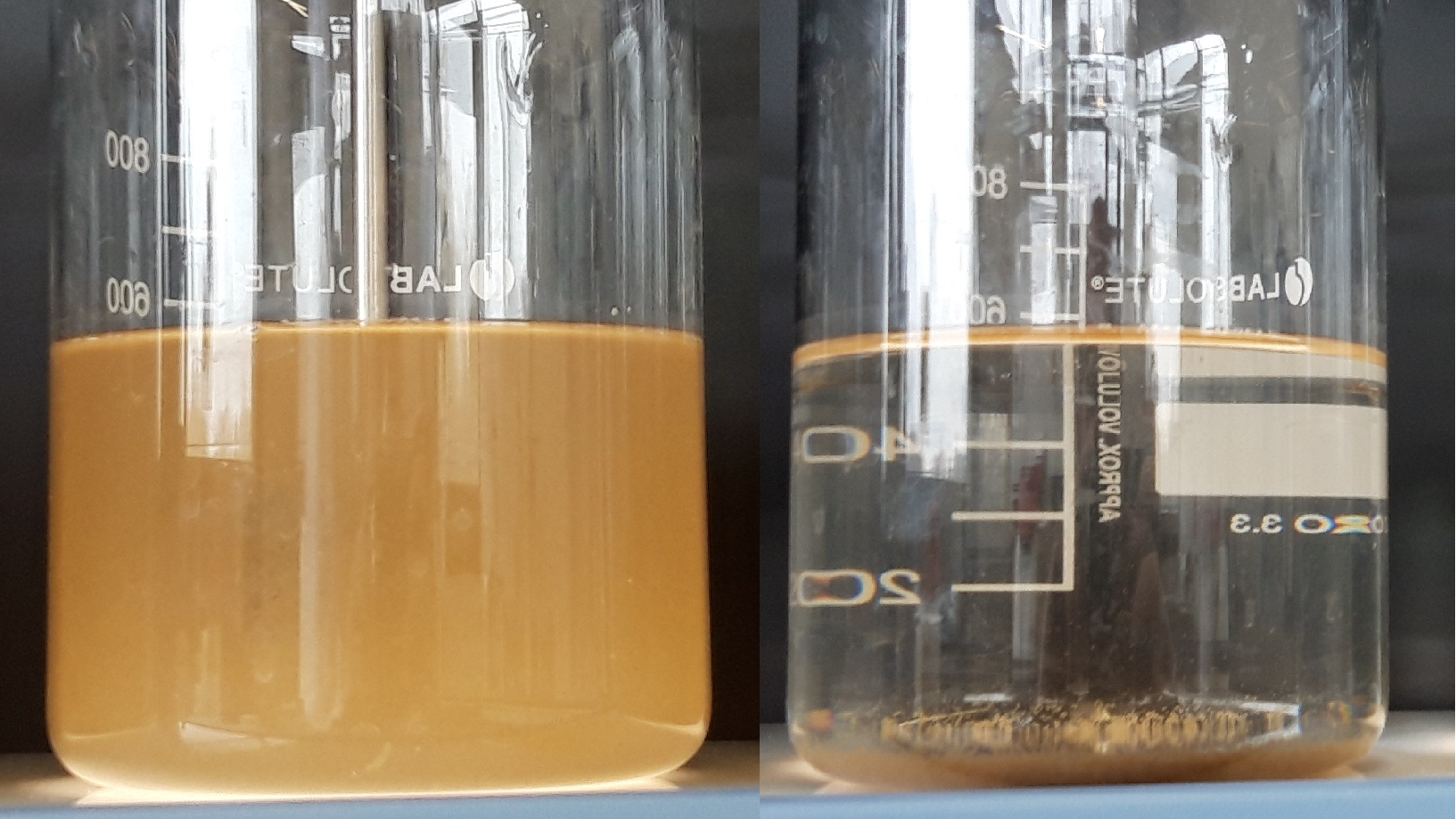 Before and after flocculation
Overall, while flocculation is an effective and widely used water treatment process, it is not a standalone solution and must be used in conjunction with other treatment processes to produce safe drinking water. Proper coagulant selection and dosage are essential to ensure the efficient and safe use of flocculation in water treatment.
¶ Application
The application of flocculation is widespread in water treatment plants, where it is commonly used in combination with other processes such as sedimentation, filtration, and disinfection to produce safe and clear drinking water.
¶ Limitations
One of the main limitations of flocculation is that it is not effective in removing dissolved contaminants from water. Flocculation is primarily used to remove suspended solids and turbidity, but it does not effectively remove dissolved contaminants such as dissolved metals or nitrates. Additionally, flocculation requires careful monitoring and control of the pH and coagulant dosage, as well as sufficient time for the flocs to settle.
¶ Dissolved Contaminants
The limitations of flocculation include its inability to remove dissolved contaminants such as arsenic, fluoride, and nitrate, which require additional treatment methods.
¶ External Factors
Also, the efficiency of flocculation is highly dependent on the type and concentration of the particles present in the water, as well as the type and dosage of the coagulant used. Excessive use of coagulants can result in over-flocculation, which can lead to poor floc settling and increased turbidity. In contrast, insufficient coagulant use can lead to inadequate flocculation, resulting in poor particle removal and poor water quality.
¶ Usage
To use flocculation, a coagulant is added to the water, which causes the contaminants to clump together and form larger particles known as flocs.
The water is then mixed or agitated to promote the formation of the flocs, which can be removed by settling, filtration, or both. The settled flocs can be removed by draining or siphoning off the clear water on top of the settled particles.
It is important to note that flocculation may not effectively remove all types of contaminants, such as dissolved minerals and chemicals, and it may not be practical or feasible in all situations.
¶ Moringa Seeds
Moringa seeds have been used as a natural and sustainable flocculant in water treatment for many years. Here is a simple guide on how to prepare and use moringa seeds as a flocculant.
It's important to note that the effectiveness of moringa seed flocculation can vary depending on the quality of the seeds and the water being treated. The exact dosage can therefore vary and must be determined by trials.
Additionally, moringa seed flocculation is best suited for removing suspended particles and turbidity, but may not effectively remove dissolved contaminants or pathogens. Therefore, it is recommended to use additional water treatment methods such as boiling, chlorination, or filtration to ensure safe drinking water.
¶ Preparation
-
Collect mature moringa seeds. Ensure that they are fully grown and dry.
-
Remove the seeds from the outer shells and crush them into a fine powder. You can use a mortar and pestle or a grinding machine for this.
-
Add the moringa seed powder to a container of water (e.g. a bucket) in a ratio of 1:50 (20 gram of powder for every 1 liter of water).
-
Stir the mixture vigorously for 10-15 minutes to ensure that the powder is fully dispersed in the water.
-
Filter the solution through a cloth or fine mesh to remove any remaining particles.
-
The base solution is now ready for use.
¶ Usage
-
Add the prepared moringa seed base solution to the water that needs to be treated in a ratio of 10ml of solution for every liter of water.
-
Stir the water vigorously for 5 minutes to ensure that the seed solution is fully dispersed in the water.
-
Let the water sit for 1 hour to allow the particles to settle to the bottom of the container.
-
Carefully pour off the clear water from the top, leaving behind the sediment at the bottom.
-
Filter the water through a cloth or fine mesh to remove any remaining particles.